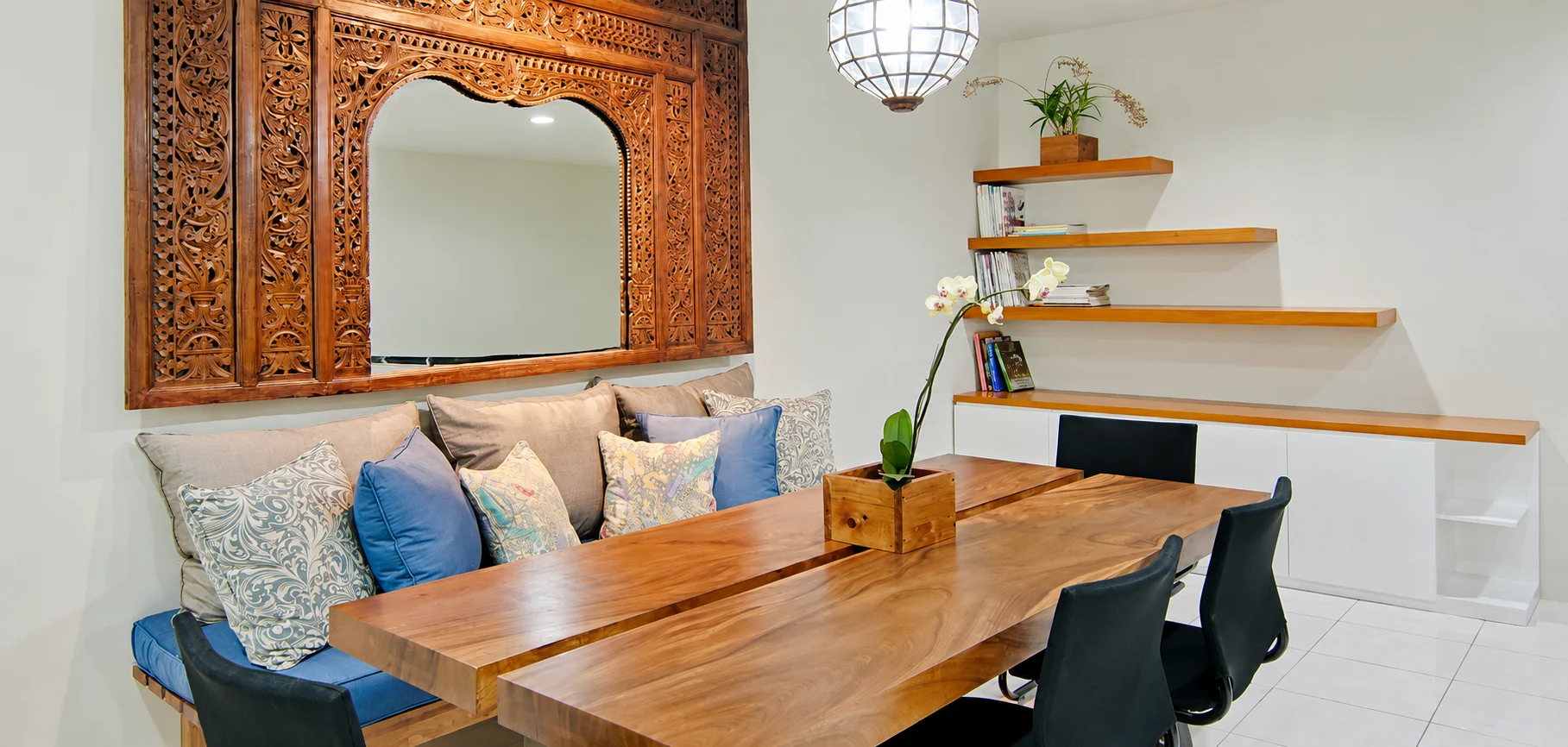
Plans, proportions, facades, circulation, and site response.
The architectural stage sets the spatial logic: how rooms connect, how privacy is held, how openings meet daylight, and how the building sits in its setting.
Architecture, interiors, custom production, and construction are handled as connected disciplines, so decisions stay coherent from the first brief to the final handover.
The architectural stage sets the spatial logic: how rooms connect, how privacy is held, how openings meet daylight, and how the building sits in its setting.
Concept, budget, drawings, materials, and implementation are coordinated under one direction so the project does not lose its intent between teams.
Custom pieces, cabinetry, hardware, surfaces, and lighting are selected or made to support the atmosphere and daily use of the space.
Construction supervision, finishing, and field decisions are managed with attention to proportion, tolerance, and the real conditions of the site.
The studio defines what must be decided early, what needs mockup or sampling, and what must remain flexible until site conditions are visible.
Brief, site, use, climate, budget, and references are studied before form or finish is fixed.
Drawings, materials, furniture, lighting, cost, and construction logic are brought into alignment.
During production and construction, the team checks details against the original spatial intent.
This keeps the project from becoming fragmented: the plan knows the interior, the interior knows the furniture, and the site knows the drawing.
The project begins with a clear direction before moving into interior, material, and construction decisions.
Finishes, furniture, fixtures, and built details are chosen for function, atmosphere, and longevity.
The design is translated into documents, coordination, site decisions, and final execution.
Your messages are end-to-end encrypted